Typed contracts, validated at the edge
Schemas describe every request and response, validated where external input arrives. The consumer knows what they will receive and the server never trusts what it was sent.

Backend
Internal APIs get forgiven. Anything another team, a mobile app or a partner depends on has to keep its shape, fail predictably and tell the caller what went wrong in a way they can act on.
What is api development at The Cubas?
The Cubas designs and builds typed REST APIs with authentication, validation, rate limiting and background job processing. APIs are built to be consumed by other teams, with predictable error shapes, versioning and documentation rather than endpoints that only their author understands.
When people call us
A mobile app that needs a backend, a system that has to talk to a third party, or an existing API that returns inconsistent shapes and undocumented errors that every consumer has learned to work around.
Built by
Ashraful Islam Hridoy, Lead Engineer
Ashraful builds the systems behind The Cubas engineering work, from typed REST APIs and data models to the React interfaces on top of them. His focus is the part most builds skip: secure access, reliable background jobs, and what happens to a system after launch.
What people search before they call
We rank for these ourselves. That is the shortest demonstration available that the search side and the build side are the same team.
How we approach it
Four decisions that separate a build which holds up from one that needs rescuing inside a year.
Schemas describe every request and response, validated where external input arrives. The consumer knows what they will receive and the server never trusts what it was sent.
Consistent error responses with a code a caller can branch on, not a stack trace or a bare five hundred. This is the difference between an integration that takes a day and one that takes a fortnight.
The Buynux API runs to twenty seven modules covering payouts, coupons, loyalty, refunds, staff roles and audit. That stays workable only because each module owns its own boundary rather than reaching into its neighbours.
Rate limiting, authentication throttling and security headers applied by default. Any endpoint reachable from the internet will eventually be probed by something automated.
Deliverables
No tiered packages with features withheld to force an upgrade. Every engagement covers what the project genuinely requires.
Stack for this work
Evidence
Not a capability list. Systems in production, described by what was genuinely hard about each one.
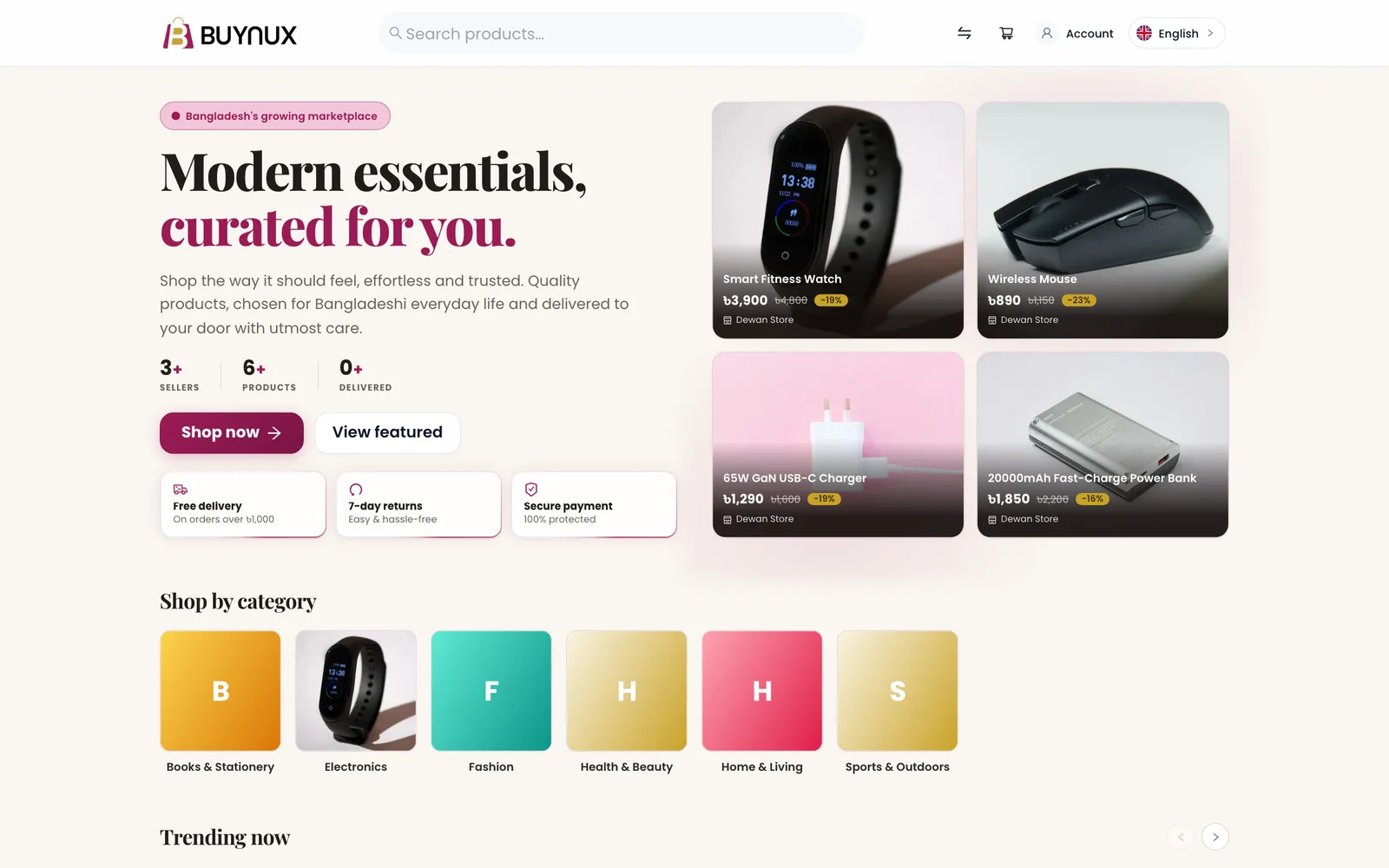 Production
Ecommerce · 2025
Multi-vendor marketplace running in production
A bilingual storefront, vendor dashboards and an admin back office in one marketplace, running in production on its own domain.
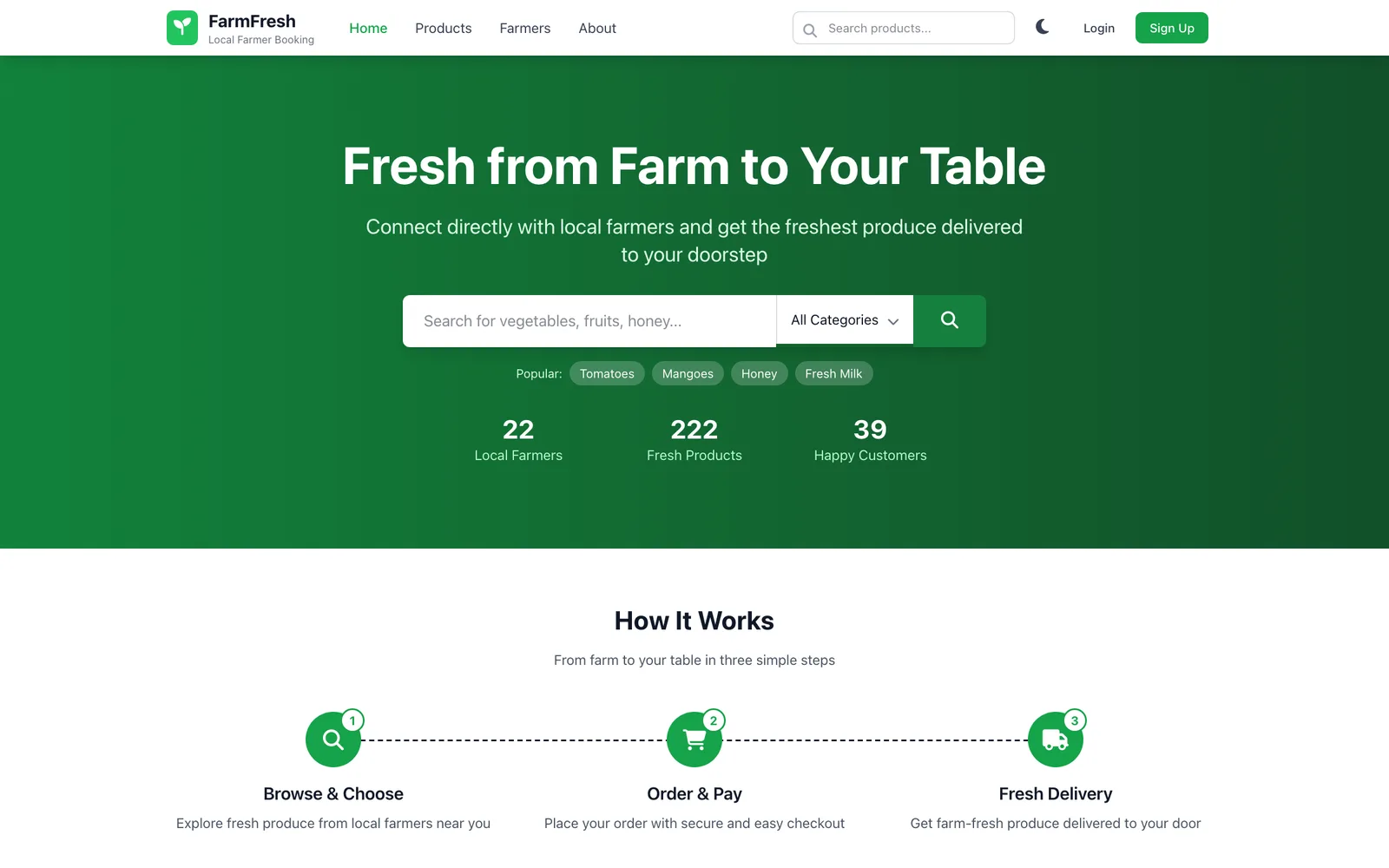 Production
Marketplace · 2025
Farm to table marketplace with a split client and API
A marketplace connecting local farmers listing produce with customers who browse, order and pay, built as a Next.js 15 client against a separate Express API.
Questions
REST for most builds, because it is cacheable, simpler to secure and easier for a client team to consume. GraphQL earns its complexity when many different clients need different shapes of the same data. We have shipped both and will recommend based on your consumers, not on preference.
Yes. The first step is agreeing the contract with whoever builds the client, because an API designed without its consumer in the room is the most reliable way to produce something that needs rewriting after the first integration attempt.
Queued workers with bounded retry budgets, so failures surface instead of retrying indefinitely. Jobs report their own state, which means a stuck queue is visible before a customer is the one to notice.
Other engineering services
Send the brief, the existing codebase or just the problem. We will tell you what it takes, what it does not need, and whether we are the right people for it.
Prefer to skip the form? Message us on WhatsApp or email yousuf@thecubas.com