ERD Tool
SQL to entity relationship diagram, with no server
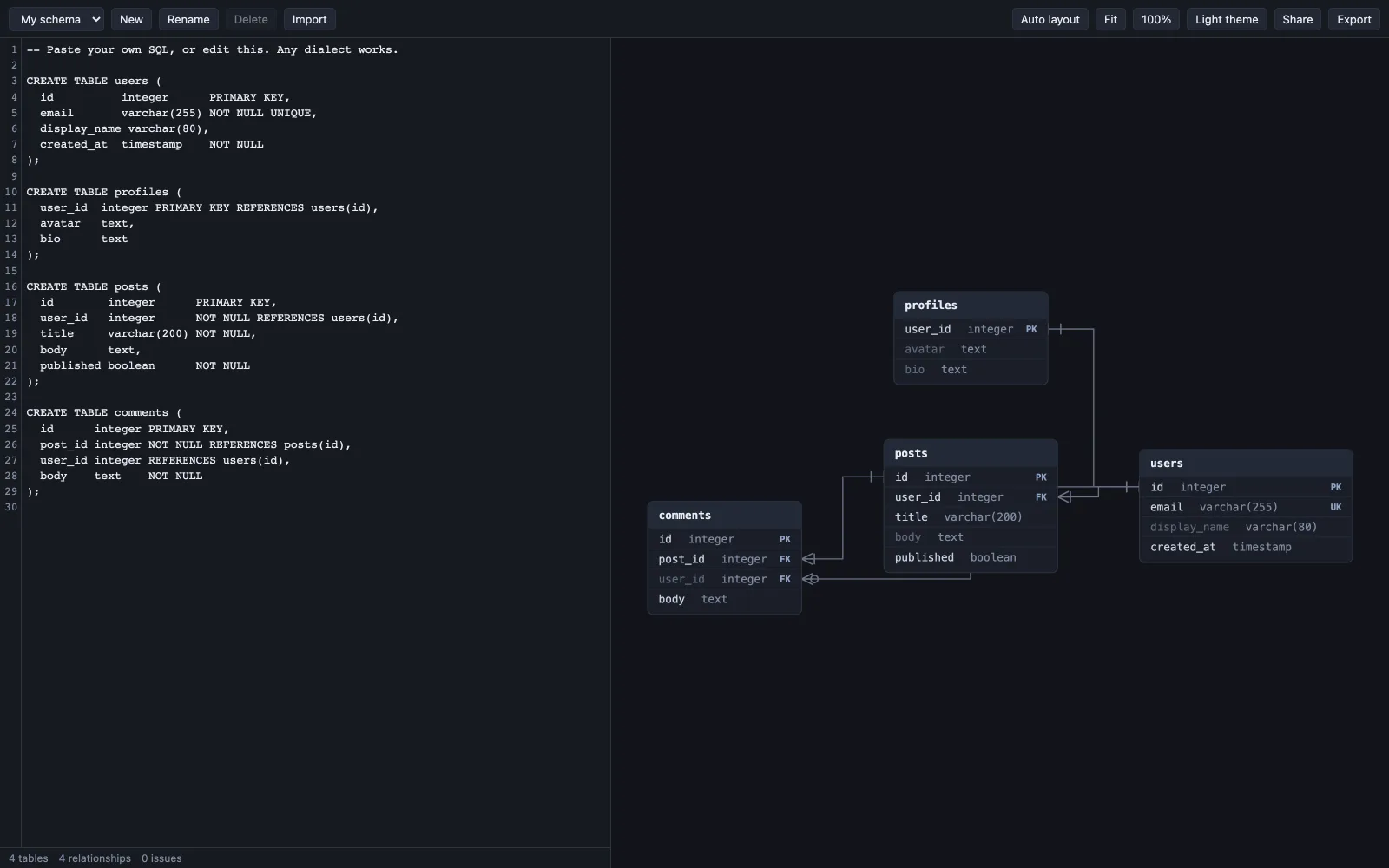
Paste SQL from any dialect and get an entity relationship diagram. No account, no upload, no server, and 247 tests covering four dialects.
What is ERD Tool?
ERD Tool converts pasted SQL into an entity relationship diagram entirely in the browser, with no account and no server. A SQL parser written from scratch feeds a dagre layout and an orthogonal edge router with crow's foot notation, and 247 tests cover four SQL dialects.
The interesting part
What Was Actually Hard
Every project looks straightforward in a case study. These are the problems that decided how it was built.
A SQL parser written from scratch
Tokenizer, statement splitter, cursor and readers for CREATE TABLE, ALTER TABLE and COMMENT ON. Using a parser library would have meant accepting its dialect assumptions, which is the part that actually breaks on real database dumps.
Ignore what you cannot model
Statements the tool does not understand are skipped rather than rejected, so pasting an entire dump works instead of failing on the first unsupported line. Tolerant input handling is why people use a tool twice.
Layout that travels with the file
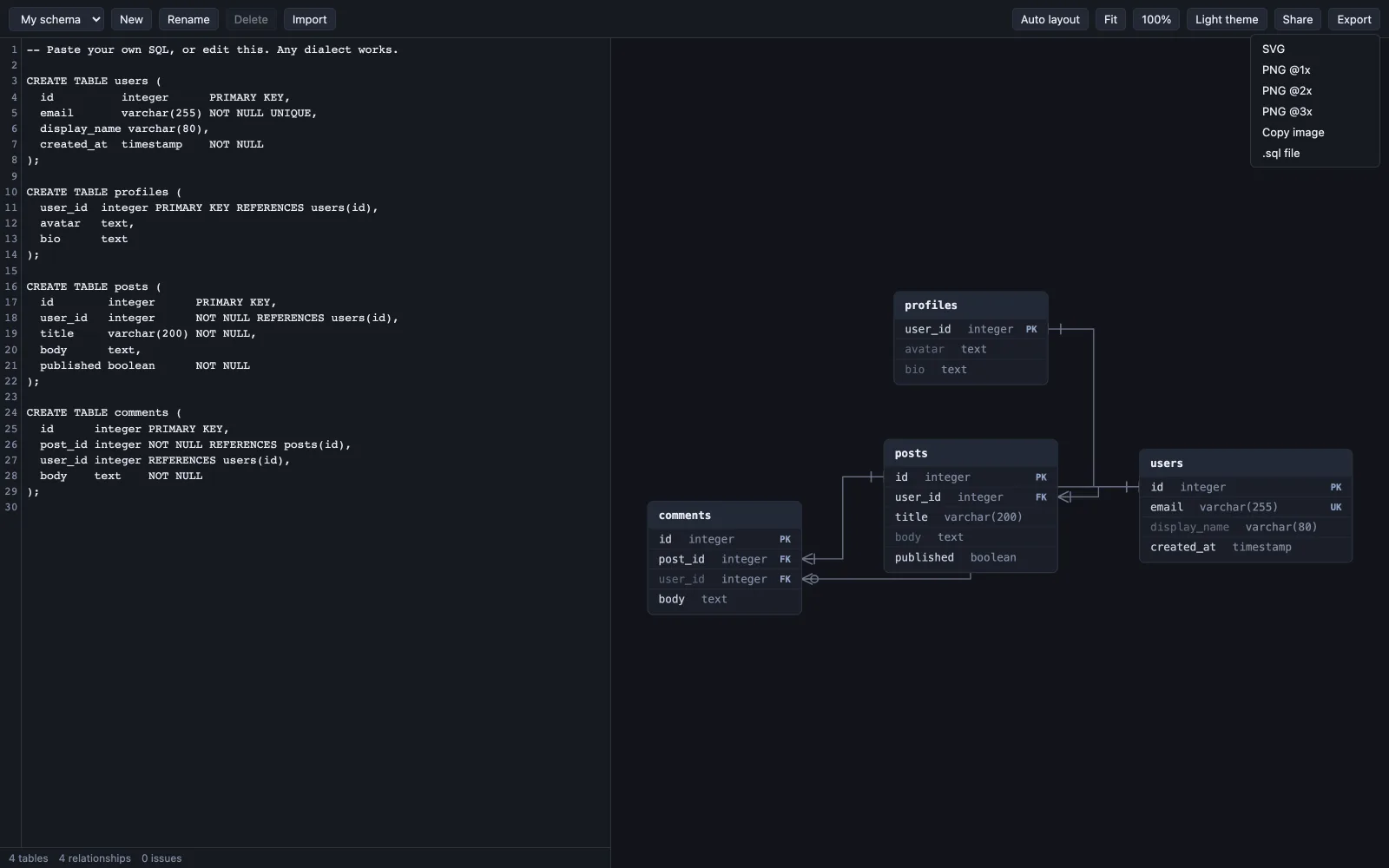
Diagram layout is stored inside the .sql file as a trailing comment, and share links compress the schema into the URL hash. No database, no account, and the state still survives being emailed to a colleague.
247 tests across four dialects
Parsers fail on the input nobody thought of. The test suite is the product here, because a diagram that is confidently wrong is worse than no diagram.
What it does
Shipped Feature Set
- Hand written SQL tokenizer and parser
- CREATE TABLE, ALTER TABLE and COMMENT ON support
- dagre layout with orthogonal edge routing
- Crow's foot relationship notation
- Shareable links with the schema in the URL hash
- Runs entirely client side
Built by
Ashraful Islam Hridoy, Lead Engineer
Ashraful builds the systems behind The Cubas engineering work, from typed REST APIs and data models to the React interfaces on top of them. His focus is the part most builds skip: secure access, reliable background jobs, and what happens to a system after launch.
Read the backgroundServices this demonstrates